Dance was a ritual before it was a business.
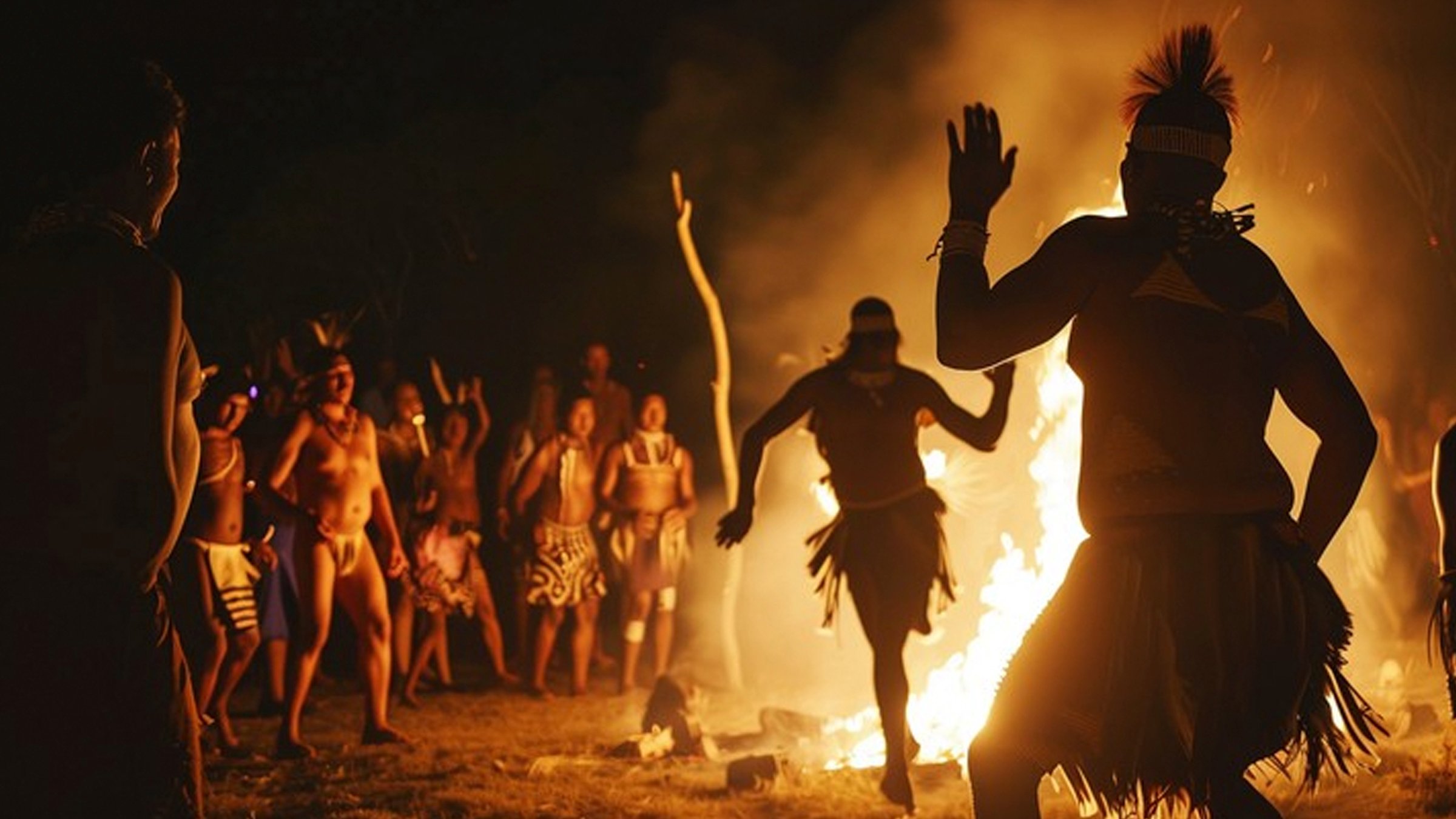
Dancing is the oldest thing we do. Long before tickets, lineups or stages, people gathered around a fire and moved together. It was tribal. It was practically spiritual. It was how a group of strangers became a community.
Sociologists have a name for what happens in those moments. Emile Durkheim called it collective effervescence: when people dance and move together, individuals stop feeling separate and the group starts to feel like one. Barbara Ehrenreich traced how that collective joy was pushed out of public life for centuries, and how it kept surviving anyway: in carnivals, in concerts, anywhere people gather.
Electronic music inherited that tradition almost by accident. Disco turned the ritual into a room. House music in Chicago, and acid house after it, rebuilt the same idea for a new generation: a dark room, a sound system, and a few hundred people who came to disappear together. When acid house crossed from Ibiza to Britain in the summer of 1988, a small London club scene became an international phenomenon within months. Nobody was filming. The dancefloor was the point.
Then the money arrived. By the 2010s, marketers had packaged four decades of electronic music under one label, EDM, and Las Vegas casinos were paying superstar DJs six figures for a single night. Today the global electronic music business is worth $15.1 billion a year, according to the International Music Summit. What used to be a warehouse is now a temporary city, sold out in minutes.
Technology pushed all of it. Production turned shows into spectacles. Streaming flattened music into background noise. Social media turned the dancefloor into content: a DJ set is now something many people experience through someone else's phone screen, vertical and thirty seconds long. The backlash has started too: some of the most respected clubs in the world now cover your phone camera with a sticker at the door.
None of this is evil. Growth paid for better sound, safer spaces and real careers for thousands of people. I say this as someone who builds these machines for a living. But something real got diluted on the way.
When the audience watches through a screen, the room stops being the point. When the lineup is a marketing asset, the music becomes a logo. When the business is measured only in growth, the values that made people fall in love with this culture become a line item you can cut.
The original promise of the dancefloor was presence. That promise is the product. Everything else (the production, the brand, the spectacle) is packaging.
And that's where I see the opportunity. This industry has spent twenty years competing on scale, and scale is now the baseline. What nobody can copy is how a night actually feels. Trust. Community. The sense that this room, tonight, is the only place to be. The same collective effervescence Durkheim described a century ago, except now it is a competitive advantage.
The promoters and brands that win the next decade will treat the old values as strategy, not nostalgia. Presence as a feature. Community as retention. Culture as the one asset that doesn't depreciate.
Dance was a ritual before it was a business. The best businesses in this industry will be the ones that remember it.
What do you think: can a dancefloor scale without losing what made it worth dancing on?